Profile view of a bearded man wearing a black baseball cap and a dark gray T-shirt against a plain light background.

Why your heat pump makes noise in a Mississippi winter

Step 1 of 3: Equipment

Why does my heat pump make so much noise in winter here in Mississippi?

Cold snaps here are short, but they still push the heat pump into a mode that sounds different from how it ran all summer. You're home with the family, the unit outside is clanking or hissing more than usual, and you want to know if that's normal for this kind of weather or if something's actually wrong with it.

It's likely defrosting itself, but not always

When the outdoor unit gets cold enough, it switches into defrost mode to clear frost off the coil, and that switch makes a whooshing or hissing sound as the refrigerant reverses direction. You may also hear a clicking reversing valve or a brief ramp-up in fan noise right after. Mississippi winters don't stay cold for long stretches, so this unit may cycle into defrost more often than you'd expect, each time the temperature hovers near freezing overnight. That part is normal. A grinding, squealing or banging sound is not defrost, and usually points to a failing motor bearing or a part working loose inside the cabinet. If the noise is new, louder than before, or doesn't stop when the cycle ends, it's worth having someone look at it.

A gray outdoor air conditioning condenser unit on a concrete pad beside a house with horizontal siding, next to a green lawn and a plain light-colored wall.

Why it clanks during defrost

A heat pump pulls heat from outside air even in winter, and that builds frost on the outdoor coil. Every so often the system reverses itself, runs hot refrigerant through that coil to melt the frost off, and for a few minutes it sounds nothing like it did cooling the house in July. Metal expands as it heats, valves switch, and the fan may slow or stop. That clanking and hissing is the defrost cycle working. It only shows up when temperatures sit near or below freezing, which in Mississippi might be a handful of nights a winter.


A white outdoor heat pump unit on a concrete pad beside a plain light wall, with gravel and mowed grass in front.

What a short cold snap does

Mississippi winters don't stay cold long, so the outdoor unit isn't built or run the way it would be somewhere that freezes all season. It cycles into defrost, clears the coil, and goes back to normal heating, over and over on the coldest nights. A unit that's low on refrigerant or has a failing reversing valve struggles to complete that cycle cleanly, so the noise runs longer or louder than it should. A contractor who works on these units through a Mississippi winter knows how a defrost cycle is supposed to sound and how long it should take.

Normal Sound or Something Wrong

Normal noise

  • A whooshing or rushing sound when the system reverses into defrost is the reversing valve switching over, and that's expected.
  • A few minutes of louder operation every hour or two during a cold snap is the defrost cycle melting frost off the outdoor coil.
  • Steam or light smoke rising off the outdoor unit after defrost is just melted frost evaporating, not a sign of trouble.
  • A steady hum from the outdoor fan or compressor running longer on colder nights is normal since the unit works harder below freezing.
  • A clicking sound when the system switches between heating and defrost is the reversing valve or defrost control doing its job.

Needs a look

  • A loud bang or metallic clank at the start or end of defrost can mean a failing reversing valve rather than normal switching.
  • Grinding or squealing from the outdoor unit points to a motor bearing wearing out, not something that clears up on its own.
  • Rattling that keeps up the whole time the unit runs, not just during defrost, often means a loose panel or a part shaking free inside.
  • A hissing sound along with weak heat can mean refrigerant escaping, and that calls for someone licensed to check it.
  • Buzzing that starts and doesn't stop can mean an electrical connection or a failing capacitor, and that's worth having checked before it strands you without heat.
  • If the noise comes with the heat pump running constantly and the house still not warming up, something is already struggling, not just adjusting to the cold.
A dimly lit bedroom at dusk with a made bed, a table lamp on a nightstand, and a condensation-covered sash window with a dark curtain.

It's past eleven on a January night, cold enough outside that the heat pump has been cycling through defrost for an hour. You're lying awake because the unit just let out a loud clank through the wall, the kind that pulls you upright to listen. Down the hall your kid's door is cracked open, nightlight on, blanket kicked half off. The vent in the hallway is still pushing air but it feels cooler than it should. You're doing the math on whether this is the sound it always makes or something new, whether you'll be calling someone in the morning or whether the house will just be cold by sunrise, and whether you'll be the one who has to track down who to call and explain all this twice.

Skip calling around

You could spend the next hour on this instead: searching for heat pump repair near you, calling two or three companies, explaining the clanking and the timing of it each time, then waiting on quotes to compare. Or you could fill out the request here and have it go to one licensed contractor working in Mississippi, someone who hears this same defrost-cycle noise every cold snap and knows which sounds mean a worn part and which mean nothing at all. That's the difference this page makes. Not fewer steps in the repair itself, just fewer steps between you and someone who can look at your unit and tell you straight what's going on with it. You already know the sound. What you need now is someone local who can stand next to that outdoor unit on a cold night and tell you whether it's fine to sleep through or not. That's who gets your request, not five companies at once.

What each sound is telling you

  • The reversing valve shifts the flow of refrigerant and often makes a sharp whoosh or thunk as it changes direction.
  • A loud bang or clank right as defrost starts or stops is usually the metal of the outdoor coil or the frame contracting and expanding with the heat.
  • The outdoor fan slows or stops during defrost, so a sound that was steady all summer can go quiet, then kick back louder when it resumes.
  • A low hum or buzz that rises with the compressor is normal, but a grinding or rattling sound points to a worn bearing or a loose panel.
  • Ice that builds unevenly on the coil can make the fan blade clip it, which sounds like a knock that speeds up and slows with the blade.
  • Ductwork popping or ticking after defrost ends is the metal response to warm air returning, not the heat pump itself.

The reversing valve is the part that puts the system into defrost in the first place. It slides a piston to send hot refrigerant backward through the outdoor coil instead of the indoor one, and that shift is what you hear as a whoosh or a thunk right before anything else changes. Metal parts expand when they're suddenly carrying hot refrigerant and contract again when defrost ends, and that movement is what causes a bang or a clank at the start or stop of the cycle rather than during it. The outdoor fan is tied to the same cycle. It slows down or stops while the coil is being heated, so a sound you've heard running steady all evening will drop off, then come back louder once defrost finishes and the fan ramps back up. A hum that rises and falls with the compressor kicking on is just the compressor working. A grinding or rattling sound instead points to something mechanical wearing down, like a bearing in the fan motor or a panel that's worked loose over time. Ice is also part of this. If it builds unevenly across the coil, the fan blade can clip it on each rotation, and that shows up as a knock that speeds up and slows down with the blade itself, not with the defrost cycle. None of this is the heat pump struggling. It's the sequence working the way it's built to.

A woman in a knitted shawl sits in a living room with a fireplace, shelves, a sofa with cushions, and a lamp by a bright window, looking off to the side.
A woman with long brown wavy hair in a green shirt over a white top stands in a living room with built-in white shelves, a ceiling fan, a potted plant and a sliding glass door.
A woman with shoulder-length gray-streaked hair in a light gray knit sweater stands smiling and looking off to the side in a living room with a sofa, houseplant, framed picture, and sunlit sliding glass door.
A woman with shoulder-length curly gray hair wearing a gray knit sweater stands near a window with a sheer curtain, looking to the side, with a blurred interior room behind her.

You let it run another winter, hoping it stops on its own. Most of the time it doesn't, and you're back to listening for that clank every cold night until something inside the outdoor unit actually gives out.

You get someone local out to look at it once, before a part fails outright. A tech who works on heat pumps all winter here knows which sound means adjust something small and which one means a part is already on its way out.

An outdoor air conditioning condenser unit on a concrete pad beside a house with horizontal siding above a brick foundation, with a flexible conduit running to a wall-mounted disconnect box.
Before you get your heat pump repair
A gray outdoor condenser unit on a concrete pad beside a beige vinyl-sided house, with a wall-mounted disconnect box, flexible conduit, mulch bed, shrubs and a concrete walkway in front.
After you get your heat pump repair
A gray outdoor condenser unit on a concrete pad beside a house with horizontal lap siding, a conduit and disconnect box on the wall, a shrub with white flowers at right and evergreen foliage at left.

Running clean

This is what a heat pump looks like when it's not struggling. The fins are clear, the pad is level, and the lines run straight to the wall. It'll still clank during defrost on a cold night, but it clears up in a few minutes and the unit goes quiet again.

A gray outdoor air conditioning condenser unit on a concrete pad beside a house with light vinyl siding, with a gray electrical disconnect box and conduit on the wall to the right.

Choking on grime

Caked dirt and matted fins make the unit work harder to pull heat from the air, and that strain shows up as noise that doesn't stop when defrost ends. If yours has looked like this for a while, the clanking you're hearing at night may not be normal defrost at all.

Power costs 14.03 cents per kilowatt-hour statewide

Most Mississippi homes heat with electricity, so your heat pump is already doing the heavy lifting on the bill at 14.03 cents a kilowatt-hour. If it's running long defrost cycles or straining to clear frost, that noise is also costing you more to keep the house warm.

EIA-861 2025 statewide residential average

  1. Outdoor temperature and coil sensors detect frost building on the coil.

  2. The reversing valve shifts, sending hot gas backward through the coil.

  3. The outdoor fan stops while the coil heats up to melt the frost.

  4. Metal in the coil and frame expands fast, causing the clank.

A beige outdoor air conditioning condenser unit on a concrete pad beside a house with horizontal vinyl siding, with refrigerant lines and a disconnect box on the wall, surrounded by dark mulch and a green shrub at left.
Pad level, lines straight, fan spinning free, clanking only while it clears frost during defrost.
An outdoor air conditioner condenser unit on a concrete pad beside a house with beige horizontal siding, with conduit running from an electrical box on the wall.
Pad cracked or sinking, fan rattling on its mount, clanking that keeps going well after defrost ends.
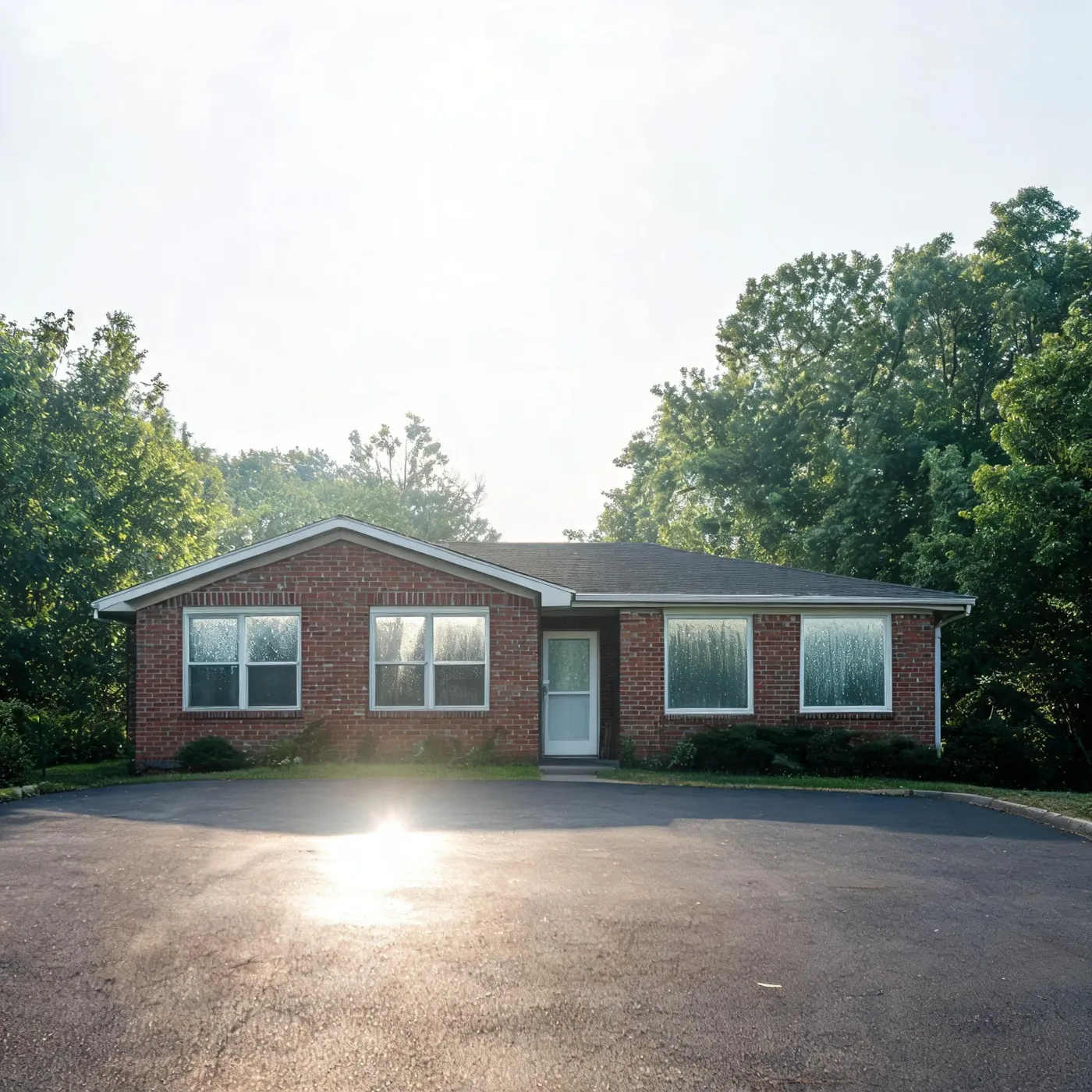
A single-story red brick ranch house with white-framed windows and a white storm door, fronted by a large asphalt parking area and backed by leafy green trees under a bright hazy sky.

NOAA puts the summer dew point across Mississippi at 70°F on average for June, July and August. That's the thickness in the air your heat pump has been pulling moisture out of all summer, and it's part of why the coil and the drain pan work as hard as they do. Winter is a different job for the same machine, pulling heat from cold air instead of moisture from thick air, and the clanking you hear during defrost is that switch in work showing up as sound. A unit that ran clean all summer can still bang during a January defrost cycle. One has nothing to do with the other.

NASA POWER T2MDEW county cells weighted by homes

A clank or two during defrost on a cold night isn't a reason to worry. A clank that keeps going after the unit switches back, or a rattle that's new and doesn't quiet down, is your heat pump telling you something is loose or wearing out. You don't need to figure out which from inside the house. A contractor local to you, who works on heat pumps all winter and knows what a Mississippi cold snap does to an outdoor coil and fan mount, can listen to it once and tell you straight what it is. You'll hear from one contractor, not a handful, so there's no juggling calls or repeating yourself to company after company. Fill out the request, and someone who already knows this equipment takes it from there.

Sunlit corner of a room with a wooden sideboard holding a ceramic vase of olive branches and a dark wooden bowl, beside a white-framed window, a hardwood floor and woven rug.
A wooden cabinet holding a pale ceramic vase with leafy branches stands beside a beige wall in a sunlit room with hardwood floors, a jute rug, and a window showing green foliage outside.
Sunlit room corner with a beige upholstered sofa holding a rust-brown cushion, beside floor-length linen curtains at a window, over a wood floor with a woven rug.
Corner of a room with beige walls, a framed photograph, a floor-length linen curtain beside a window, an upholstered armchair with a knit pillow, white baseboards and trim, wood flooring and a pale rug.
Sunlit living room corner with a beige upholstered armchair with a cushion, linen curtains beside a wooden-framed window, green vertical panelled wall with a framed print, and a wooden table edge over a woven rug.

Describe it once

Your request stays with one local pro.

Describe it once

Asking costs nothing, and the choice to hire stays yours.