






Why your heat pump has ice on it in a Mississippi winter

Step 1 of 3: Equipment

Why does my heat pump have ice all over it this winter?

A little frost along the bottom edge of the outdoor unit is normal on a cold morning. It's when the coil is caked in ice, the fan can't turn, or the ice is still there by afternoon that it's a problem. Mississippi winters don't stay cold all day the way a northern winter does, so ice that hangs on past sunrise usually means the unit isn't shutting itself off the way it should.

The defrost cycle isn't clearing the coil

Every heat pump builds some frost in cold, damp weather and clears it with a defrost cycle that briefly reverses the system and runs heat through the outdoor coil. If that cycle isn't kicking in, or isn't running long enough, ice builds up faster than it melts off. A stuck defrost control board, a failed sensor, or a fan that won't stop spinning when it should are the usual reasons. In Mississippi, where cold snaps come with damp air off the Gulf, that combination is exactly what loads a coil with ice fast. Once ice covers the coil, the unit can't pull heat from outside air, so it runs longer and heats less, and the sealed system underneath can take damage if it keeps going like this.

An outdoor condenser unit encased in thick ice stands on snow beside a house with horizontal siding and exterior pipes, with bare trees and a sunset glow in the background.

You go out for the paper a little after seven and the yard is still gray. The grass has that stiff, white look it gets maybe a dozen mornings a year down here. Then you see the unit against the fence line, and it stops you. Not frost this time. A hard shell of ice over the whole cabinet, thick enough that you can't see the coil fins underneath it at all. The fan on top sits dead still. Inside, the house is running on the backup heat, blowing warm enough, but you know that's not how it's supposed to be working this early in the day. You leave it and go in, but you keep thinking about it over coffee.

A gray outdoor condenser unit sits on a concrete pad against a house wall with horizontal siding above a stone veneer base, with an electrical disconnect box and conduit on the wall and a leafy shrub in mulch to the left.
A thin line of frost along the bottom edge, gone by the time the sun clears the roofline, with the fan turning freely.
An outdoor air conditioner condenser unit on a concrete pad beside a house with horizontal siding above a concrete block foundation, with insulated refrigerant lines and a vertical white pipe on the wall.
A thick white shell over the coil, the fan blades caked stiff, and the lines along the block foundation gone stiff too.

How Defrost Is Supposed to Work

  • Your heat pump moves heat from the outdoor air into the house, so the outdoor coil runs colder than the air around it.
  • Below about 40 degrees, moisture in the air lands on that cold coil and freezes, which is why frost shows up on cold mornings.
  • A normal defrost cycle reverses the system for a few minutes, sends heat to the outdoor coil, and melts that frost off on its own.
  • You'll know it worked because steam rises off the unit for a minute and the fan starts turning again right after.
  • If the coil keeps icing over faster than each defrost clears it, something is stopping that cycle from finishing the job.
  • A fan that won't turn, a stuck reversing valve, or a bad defrost sensor are the usual reasons the ice wins instead.

Your heat pump spends the winter pulling heat out of outside air, even air that feels too cold to hold any. Doing that cools the outdoor coil down below the air temperature around it. When that air dips under about 40 degrees, whatever moisture is in it lands on the coil and freezes, the same way frost forms on a car windshield overnight. That's expected. The system is built to handle it. Every so often, a thermostat inside the outdoor unit or a timer in the control board tells the system to reverse itself for a few minutes. Heat that was going into your house gets sent backward, out to the coil, and it melts the frost off. You'll see steam coming off the unit, hear the fan slow or stop, and then it kicks back on once the coil's clear. The whole thing runs on its own, no thermostat setting to touch, no switch to flip. The trouble starts when that cycle can't finish what it started. Ice keeps building faster than each defrost run melts it back down, until it's ahead of the system instead of behind it. That points to something specific failing, not just cold weather doing its thing. A fan motor that's seized, a reversing valve stuck in one position, or a defrost sensor reading the coil wrong will all stop the cycle from doing its job, and the ice just keeps winning.

An older woman with short gray hair in a cream cable-knit turtleneck sweater smiles while looking to the side in a wooden kitchen, with a round loaf of bread on a board in the foreground and a lit candle by a dark window.
A woman and a child wrapped together in a thick knitted blanket on a sofa, both with eyes closed, with a lit table lamp and houseplant in the dim background.

A heat pump pro near you

Only one pro gets your request, so you hear from one company.

No fee to send it, and nothing to sign.

Why defrost runs at all

Your heat pump checks itself for this on a timer, usually every ninety minutes or so when it's cold out. It switches briefly into cooling mode, which sends hot refrigerant out to the coil and melts the ice off. You might see steam come off the unit for a few minutes, or hear it get louder. That's the system working the way it's built to. The fan shuts off during this so it doesn't blow cold air through the house, and once the coil is clear, it switches back to heating and goes on with the day.


When the defrost cycle fails

If the sensor that tells the system the coil is cold goes bad, or the reversing valve sticks, defrost never kicks in. Ice builds with nothing to stop it, layer over layer, until the coil's buried and the fan can't spin. The outdoor fan motor itself can fail the same way, leaving the unit stuck in one mode. None of this clears on its own once it's gone this far. A contractor who works on heat pumps through a Mississippi winter can usually tell from the pattern of the ice which part gave out.

A woman with dark hair in a bun wearing a cream knit sweater sits on a gray sofa in a bright living room, looking off to the side.
A woman wrapped in a knit blanket sits on a gray sofa in a living room, looking toward a bright window with houseplants and an armchair in the background.
A woman in a gray cowl-neck sweater sits on a light sofa with cushions, smiling and looking to the side, with a kitchen and window visible behind her.
A woman with dark hair in a bun, wearing a light linen shirt, sits on a sofa and looks to the side, with a window, houseplants and a kitchen with pendant lights blurred behind her.

When the defrost cycle is working

You might catch it if you happen to be outside. The unit pauses, you hear a change in sound, and steam rises off the coil for a few minutes. Cold air blows out of the vents inside while this happens, which throws some people off, but it passes. Within ten or fifteen minutes the cycle ends, the coil is bare metal again, and the unit goes back to heating the house. This can repeat several times on a cold day without you noticing anything except maybe a short stretch of cooler air from the registers. No ice builds up because none gets the chance to.

When the defrost cycle has stopped working

The sign is that nothing changes. The frost from this morning is still there at noon, then it's thicker by evening. No steam, no pause in the sound from outside, no few minutes of cool air to tell you the system tried. The coil keeps icing over because whatever tells it to switch into defrost, a sensor, a control board, a reversing valve, isn't doing its job. Left alone, the ice spreads until the fan can't turn and the unit can't pull any heat from the air at all. A contractor who works on heat pumps in Mississippi winters can tell which of those parts failed once they're looking at it.

Power costs 14.03 cents per kilowatt-hour statewide

At 14.03 cents per kilowatt-hour, running a heat pump on backup heat while it's iced up costs more than letting a working defrost cycle do its job. A unit stuck in a freeze-thaw loop all day pulls power without actually warming the house, so a stubborn ice problem shows up on the bill before you've even called anyone.

EIA-861 2025 statewide residential average

  1. The outdoor coil drops below freezing and frost starts forming.

  2. A sensor reads the coil temperature and starts a timer.

  3. The control board switches the unit into cooling mode to defrost.

  4. A reversing valve sends hot refrigerant out to the outdoor coil.

A woman stands in the open black front door of a white-sided house with a dark shingled roof while a man in a navy jacket approaches along the walkway, with lantern wall lights, a potted shrub, and flowering garden beds nearby.

What a frozen unit means for your house

While that outdoor unit sits there iced up, your house is losing. The heat pump can't pull warmth from the air through a coil that's sealed in ice, so the system leans on backup heat strips to keep the rooms from going cold. Those strips work, but they pull a lot more power than the heat pump does on its own, and at 14.03 cents per kilowatt-hour that shows up on the bill fast. Meanwhile the people counting on that warmth, the kids getting ready for school, anyone older who feels the cold quicker, are stuck waiting on a system that's fighting itself instead of heating the house.

Left alone, it doesn't fix itself. A unit stuck in that freeze-thaw loop can run that way for days, and the strain on the fan motor and compressor isn't something you want to find out about in February. A local contractor who works on heat pumps all winter has seen this exact pattern plenty of times and usually knows within a few minutes of looking at the outdoor unit what's keeping it from defrosting on its own. Getting matched with one means someone familiar with Mississippi winters looks at your specific system, not a dispatcher sending out whoever's free.

A gray upholstered sofa with a beige cushion and knit blanket beside a curtained window, with a white mug and a book on a dark wooden table in the foreground and a lit lamp in the background.
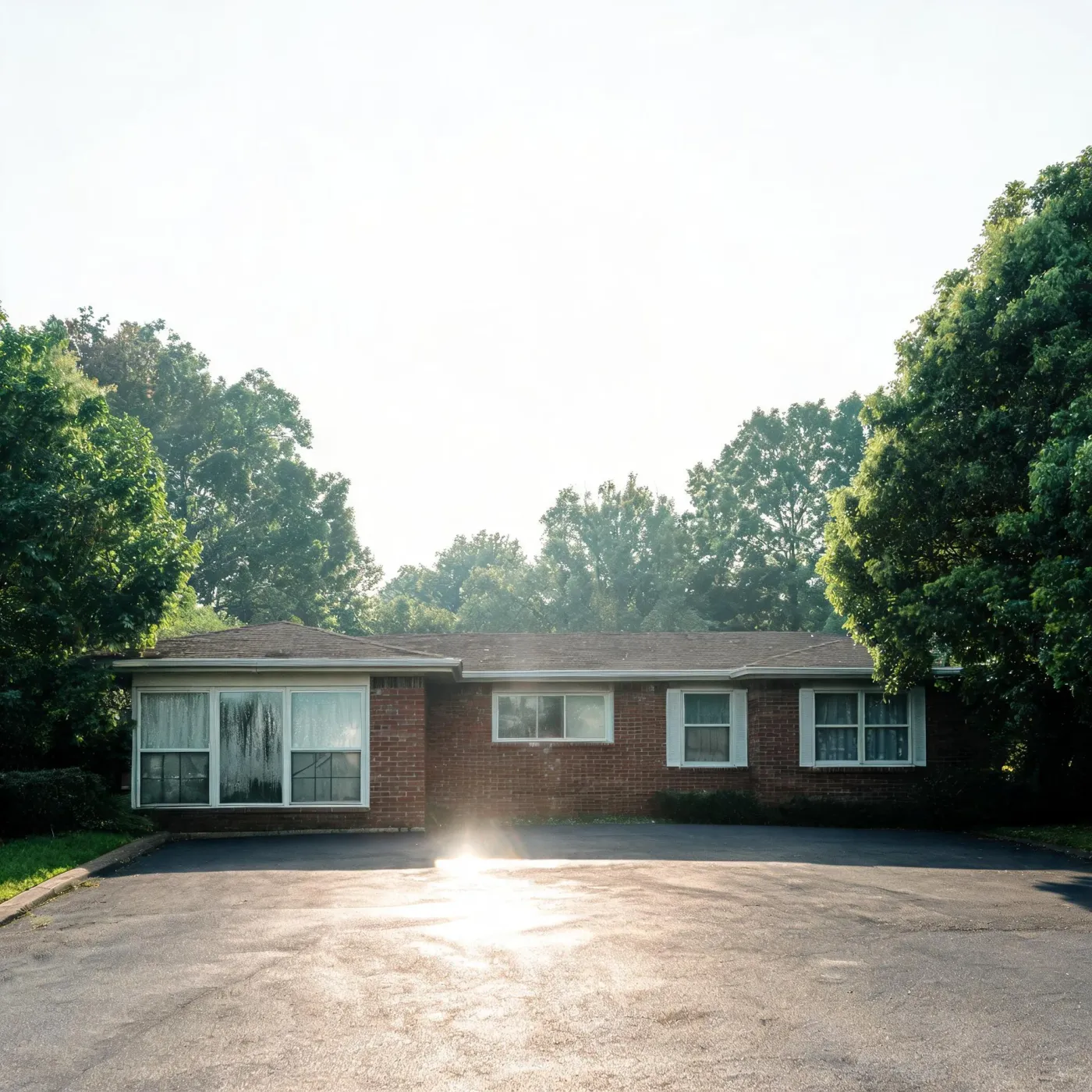
A single-story brick ranch house with white-framed windows behind a large empty asphalt parking lot, surrounded by leafy green trees under a bright hazy sky with sun flare.

Mississippi summers run thick. Averaged across the state for June, July and August, the dew point sits at 70°F, according to NOAA, and that's the kind of air where sweat doesn't dry and the grass stays wet past nine. That same heat pump pulling moisture out of your house all summer is why icing catches people off guard in January. The unit works the air hard enough in July that owners stop expecting trouble from it at all, so when a solid white shell shows up on the coil some frozen morning, it looks like the unit broke rather than something that needs a look.

NASA POWER T2MDEW county cells weighted by homes

An outdoor air conditioning condenser unit with dusty coils sits on a concrete pad against light horizontal siding, with an electrical disconnect box and refrigerant lines on the wall and a shrub and mulch at left.
Before you get your heat pump repair
A gray outdoor condenser unit sits on a concrete pad beside a house with horizontal lap siding, with a wall-mounted disconnect box and refrigerant lines, mulched beds and a shrub nearby, and a concrete walkway in the foreground.
After you get your heat pump repair

A little frost on a cold morning is nothing. A coil sealed in ice that won't clear by afternoon means the defrost cycle isn't doing its job, and backup heat strips will keep running up the bill while the real problem sits outside your window. That's a repair, not something that fixes itself by spring. A tech who works on heat pumps all winter in this state has seen that frozen coil before and knows the short list of things that cause it, a stuck reversing valve, a bad sensor, a fan that's lost its nerve. You'll get matched with one licensed contractor near you, not a handful of companies competing for your callback, just someone local who can look at your unit and tell you straight what's wrong. Your house stays warm, your family stays comfortable, and that ice stops being your problem to watch.

A living room corner with a beige upholstered sofa, cushion and knit throw, a potted green plant in a woven basket, a framed botanical print on a taupe wall, and a window with foliage outside.
Sunlit room corner with a paned window, sheer cream curtain, a leafy plant in a woven basket on a wood floor, and a textured jute rug.
Sunlit room corner with a white-framed window overlooking green foliage, a wicker basket holding a cream knit blanket on a wood floor, and a woven rug in the foreground.
A woven basket holding folded cream blankets sits in a corner on a wood floor beside a linen curtain and window, with window-frame shadows cast on the beige wall.
Sunlit room corner with a potted variegated plant in a woven basket on a wood floor, a linen curtain beside a multi-pane window showing green trees, a framed artwork at upper left, and a jute rug in the foreground.

A local pro for your heat pump repair

Your request stays with one local pro.

Get one local pro

Sending the form costs nothing.