


What emergency heat means on a Mississippi heat pump

Step 1 of 3: Equipment

Emergency heat is a backup setting on your thermostat that switches your heat pump off and runs electric resistance coils instead. Your heat pump normally pulls warmth from the outside air, even when it's cold out. But when the outdoor unit ices over and can't defrost itself, or the outdoor unit fails outright, that backup heat is what keeps the house warm while it sits broken. You flip it on yourself, usually by a switch labeled EM HEAT. It is not a setting to leave on by habit. Those coils heat the air directly, and since most homes here already heat with electricity, running on them for more than a day or two shows up on your power bill. Emergency heat is meant to get you through until the heat pump itself is fixed, not to replace it.

A gray outdoor air conditioner condenser unit on a concrete pad beside a house with horizontal siding and an electrical disconnect box, surrounded by grass.

Why the outdoor unit ices up

A heat pump pulls warmth from outside air even on a cold night, and that process puts frost on the outdoor coil. Normally the unit runs a defrost cycle to clear it, reversing itself for a few minutes before going back to heating. If that cycle fails, ice builds up and the coil can't pull heat from the air anymore. That's when the emergency heat setting matters, because it bypasses the outdoor unit entirely.

A white outdoor heat pump unit on a concrete pad beside a house with horizontal lap siding, with a plain light wall and grass lawn to the left.

What the coils are doing

Flip the switch to emergency heat and the outdoor unit shuts off completely. Electric resistance coils inside the indoor air handler take over, the same kind of coils in a space heater or a toaster. They don't need outside air to make heat, so icing or a frozen unit outside doesn't stop them. That's also why a thermostat set to emergency heat for days at a stretch is worth a call, since those coils use more power than the heat pump does to produce the same warmth.

Why is my heat pump blowing cool air in winter

You've got the thermostat set to 70 and the air coming out of the vents feels barely warm, maybe cool. You might hear the outdoor unit running longer than usual, or notice ice building up on it when you walk past. Sometimes the system short cycles, kicking on and off every few minutes instead of running a steady stretch. None of that means the heat pump is done for, but it does mean it's working harder than it should to keep your house at temperature. Left alone through a cold snap, a heat pump stuck in this state can run up your electric bill fast and still leave the house colder than you'd like.

A gray outdoor condenser unit on a concrete pad beside a house with horizontal lap siding, connected by conduit and lines to a wall-mounted disconnect box, with a shrub and gravel bed to the left.

Heat pump running normally

This is what the outdoor unit should look like through the winter, sitting clean on its pad with the fan grille clear and the coil visible behind it. Air moves through it freely, so it can pull in outside warmth and defrost itself on schedule without strain.


An outdoor air conditioner condenser unit on a concrete pad beside a house with horizontal lap siding, with refrigerant lines and a gray electrical disconnect box on the wall, surrounded by bare dirt.

Heat pump in trouble

When the coil guard and fan grille look like this, caked with dirt and buildup, the unit can't move air the way it needs to. That blocks the defrost cycle, ice builds up faster than it clears, and the thermostat may fall back on emergency heat more than it should.

A smiling man in a navy long-sleeve shirt sits at a wooden table in a kitchen and dining area, with a ceramic mug, a potted plant, and a sliding glass door behind him.
A smiling bearded man in a green henley shirt stands at a kitchen island with a gray mug, looking off to the side, with a dining area and shelves blurred behind him.
A smiling bearded man in a navy sweater sits at a white kitchen island with a ceramic mug, with open shelves, potted plants and a range hood behind him.
A smiling man in a dark olive long-sleeve shirt sits in a kitchen beside a counter with a dark mug, with a dining table, sideboard and hallway visible in the blurred background.
A gray outdoor condenser unit of an air conditioner or heat pump sits on a concrete pad beside a house with horizontal lap siding, with a wall-mounted disconnect box and conduit above it, mulched beds, shrubs and grass nearby.

Done looking for a heat pump pro

Fill out one short form instead of calling around.

Get the heat pump repair search off your mind today.

Hand off my repair

Sending the form costs nothing.

A closed dark laptop and a ceramic mug of coffee on a wooden dining table, with wooden chairs, a dark kitchen cabinet with cutting boards and a potted plant, and a leafy plant by a window in the background.

What flipping to emergency heat actually does

Switch the thermostat to "emergency heat" and the outdoor unit shuts down completely. The compressor stops, the fan stops, and every bit of heat now comes from electric coils in the indoor air handler, the same kind of coils in a toaster. There's no outside air involved anymore, so a frozen or broken outdoor unit stops mattering. The thermostat usually shows a small flame or the letters "EM HEAT" on the display so you know it's set.

That switch is meant to get you through until a contractor looks at the outdoor unit, not to replace it long term. Those coils draw a lot more power than the heat pump's compressor does, so a bill that covers a few days on emergency heat will run higher than a normal one. If you're already someone who checks on a system before it becomes a bigger repair, this is the setting that buys you heat in the house while you get someone out to find out why the outdoor unit won't run.

A gray upholstered sofa with a matching cushion sits beside a potted plant and a wooden table holding a small green plant in a stone pot, near a curtained window.
A gray outdoor condenser unit on a concrete pad beside a light-colored lap-sided house, with a wall-mounted disconnect box, refrigerant lines, mulch bed and shrubs, and a concrete walkway in the foreground.

Working normally

This is the unit doing its job. The coil behind the fan grille stays clear, the pad underneath stays clean, and the disconnect box on the wall sits untouched. Warm air keeps coming through the vents without the thermostat ever needing to switch over.

An outdoor air conditioner condenser unit with rust spots on its top grille sits on a concrete pad beside a house with light horizontal siding, with conduit lines and an electrical box on the wall and a mulch bed to the right.

Struggling, iced or failing

Rust on the fan grille, dirt packed around the base, a coil that can't shed frost the way it should. A unit in this shape is the one that freezes up on a cold night and leaves you flipping to emergency heat more than you'd like.

An outdoor air conditioner condenser unit on a concrete pad beside a house with horizontal siding, with conduit, cables and an electrical box on the wall and mulch beds at either side.
Before you get your heat pump repair
A light gray outdoor heat pump unit mounted on a concrete pad beside a house with horizontal lap siding, with refrigerant lines and conduit running to a wall-mounted electrical box, gravel and a leafy shrub nearby.
After you get your heat pump repair

Stuck on emergency heat and leaving it alone means paying for electric resistance heat to carry the whole house through January and February, since the coils are heating everything the heat pump used to handle on its own.

Stuck on emergency heat and getting the outdoor unit looked at means the heat pump goes back to doing most of the work, and the coils go back to backup duty instead of running the house.

Power costs 14.03 cents per kilowatt-hour statewide

At 14.03 cents per kilowatt-hour, those electric coils aren't cheap to run. A heat pump moving warmth from outside air costs far less to run than the coils that take over on emergency heat, so a stuck heat pump on that setting shows up fast on your bill.

EIA-861 2025 statewide residential average

A man in a blue T-shirt sits on a light gray sofa, laughing while looking at an open laptop in the foreground, with a framed picture, lamp and potted plant behind him.
A bearded man in a blue and brown plaid flannel shirt stands indoors looking out a window at snow-covered trees, with a ceramic mug on the windowsill.

What emergency heat tells you

  • Emergency heat is a thermostat setting that shuts off the outdoor unit and runs electric coils instead.
  • A heat pump that's iced over, stuck in defrost, or showing a failed part should move the thermostat off emergency heat to a repair, not a permanent fix.
  • Leaving it on emergency heat through January and February means the coils carry the full heating load at 14.03 cents per kilowatt-hour.
  • A heat pump running normally pulls outside warmth without ever needing the thermostat switched over.
  • Sorting out whether it's ice, a bad part, or something else usually means calling around and explaining the same problem more than once.
  • Sending the form here hands that search off to someone else, so the only call left to make is the one that fixes it.

Emergency heat on a Mississippi heat pump is a backup, not a repair. It switches the outdoor unit off and puts electric coils in charge of the whole house. That's fine for an hour while ice melts off the coil. It's not fine for a week in January, because those coils cost more to run than the heat pump they replaced, and the bill shows it. The setting itself doesn't tell you what's wrong. It could be ice that never cleared, a defrost cycle that's stuck, a failed sensor, or a part that's worn out. A heat pump working the way it should never needs the thermostat touched. It pulls warmth from outside air on its own, defrosts itself in a few minutes, and goes back to heating without you noticing. If yours is stuck on emergency heat, that gap between normal and not normal is what needs a look, not a guess. Most people in this spot end up calling a few contractors, describing the ice or the noise or the cool air each time, then waiting on quotes to compare. Sending the form here means that part is done. You're not the one tracking down who's available or repeating the problem to a third person. The thermostat setting got you through the cold snap. Finding out what's actually wrong with the unit is the next step, and it's the one that gets you off emergency heat for good.

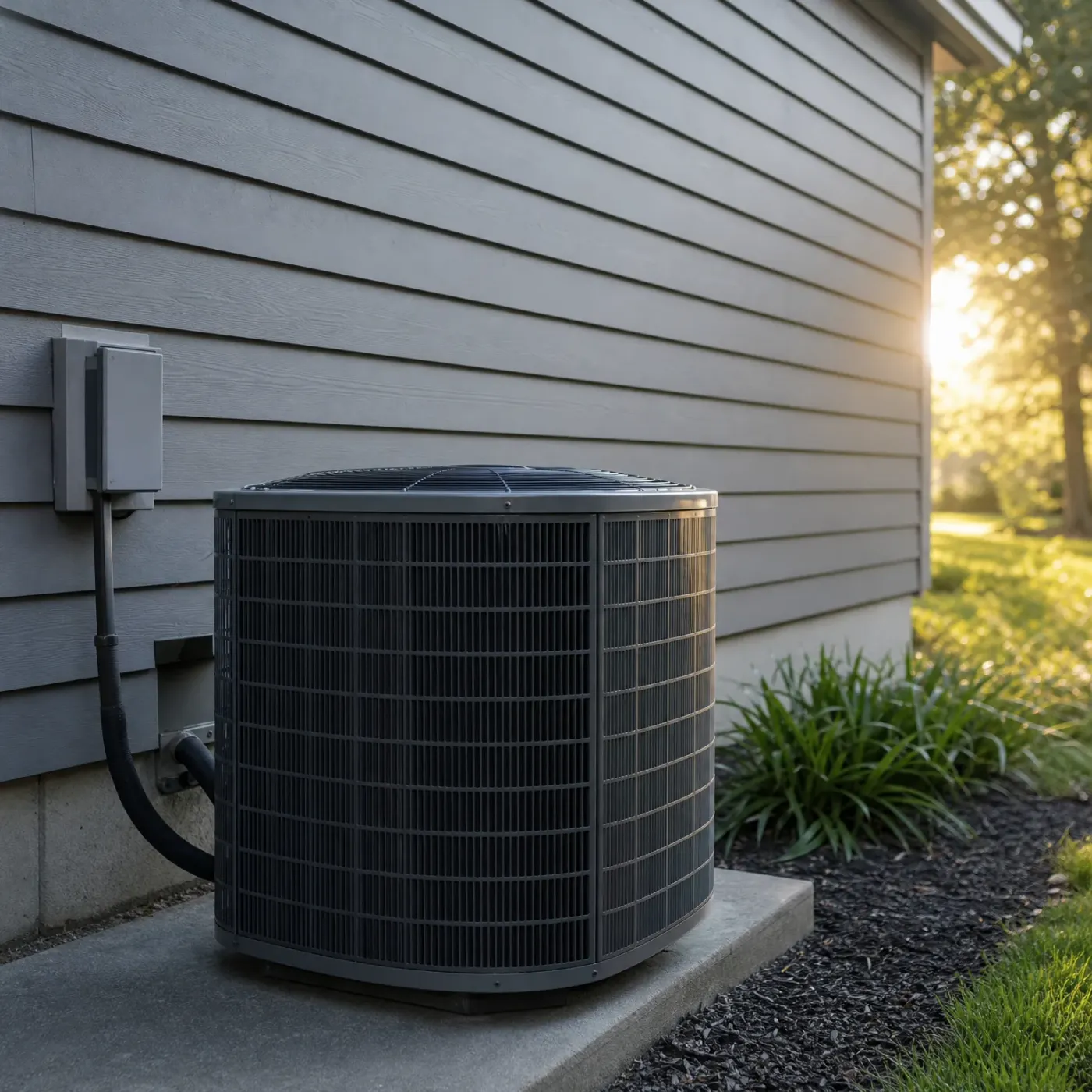
An outdoor air conditioner condenser unit on a concrete pad beside a gray horizontal-lap-sided house, with an electrical disconnect box and refrigerant line on the wall, grass, shrubs and a tree with low sun behind.

It's off your list after this

Send it today

Explain the job once and skip repeating it on every call.

You're not committing to anything by asking.